70% of meetings are inefficient, unproductive, and unnecessary
Rocio Romero ·
Studies reveal that up to 70% of business meetings are inefficient and unproductive, negatively impacting employee output and company profitability, especially with the rise of remote work.
Posts
Ideas, copy and a content calendar that sound like your brand
Numerous studies show that a large portion of meetings are inefficient and not profitable for companies. The excess time spent on these directly affects employee productivity, preventing them from completing pending tasks.
At Nömad, we share some revealing data, how to better invest your time in meetings, and some of our solutions for productive brand management.
Nearly 40% of employees fall asleep in meetings
That's right. It sounds unbelievable. But, according to a survey conducted by Atlassian, 91% of participants confess that they get distracted during a meeting. And worse, 39% fall asleep at some point.
Additionally, this same study reveals that about 73% of employees do other things during meetings. Have you ever attended an in-person or online meeting where one or more of the interlocutors wasn't paying attention? If it has happened to you (as it has to us), you surely know how it feels from the other side.
Imagine if it were a sales meeting! It would likely result in a lost potential client.
But wait, there's more. According to a survey conducted by Harvard Business School of hundreds of executives and employees, up to 70% of meetings are unnecessary. 65% of this sample claim they procrastinate on tasks by spending time in meetings, which in turn leads to a loss of employee profitability.
A context marked by the pandemic
If the pandemic changed the way we work and remote work became the modus operandi for many companies, the number of meetings has increased by almost 7x since 2020. Currently, a professional has an average of 278 meetings per year compared to 45 meetings annually pre-Covid.
Doesn't that seem crazy to you? To us, it does.
With this data, it's no surprise that 70% of meetings are inefficient, right?
Best practices for making meetings profitable
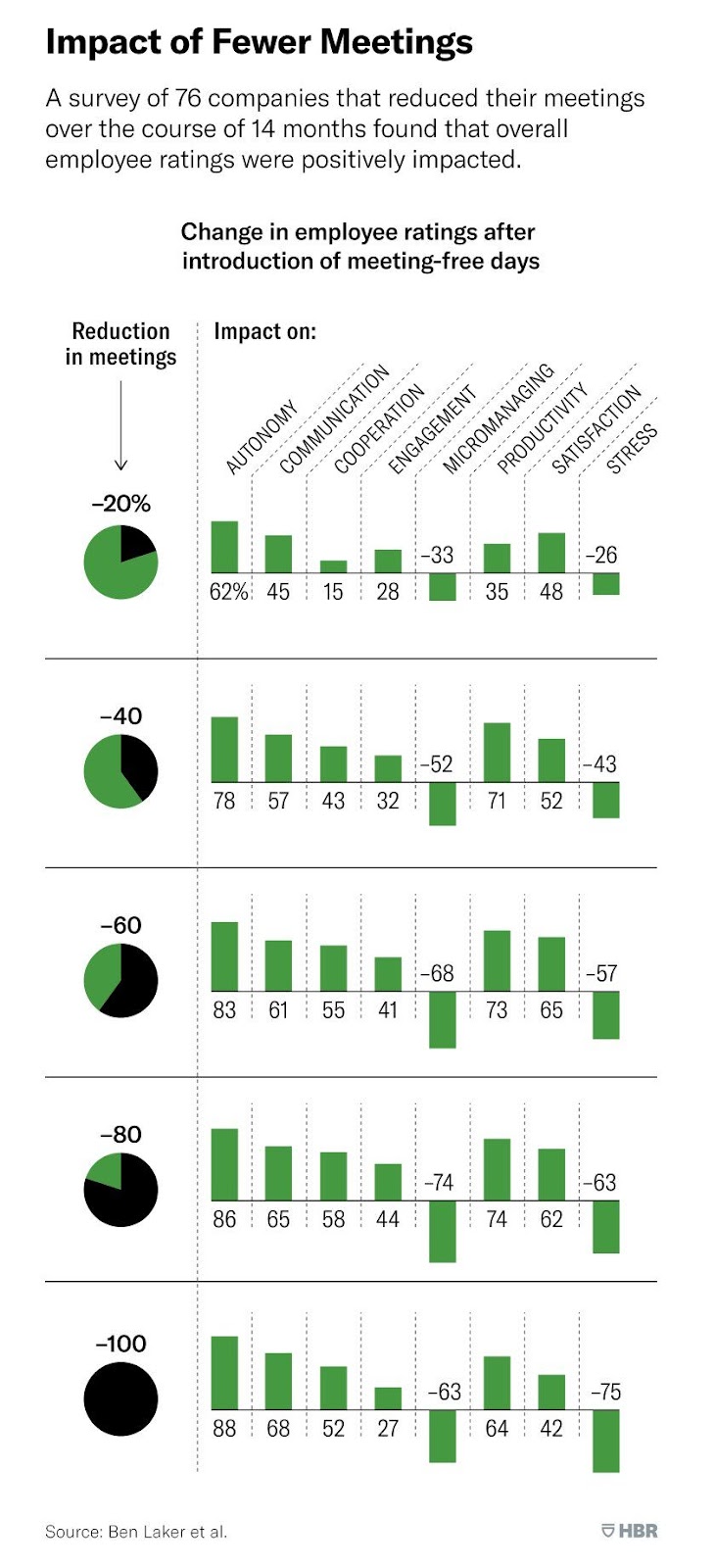
Another study that confirms our theory is an experiment conducted on 76 companies with more than 1,000 employees over 14 months, which reveals how reducing time spent in meetings has a major positive impact on employees.
Reducing time in meetings increased employee autonomy, communication, cooperation, interaction, productivity, and satisfaction. At the same time, it decreased stress and micromanaging* (we'll tell you what this buzzword means below if you don't know it yet).
Once the landscape was analyzed, from the Nömad branding and digital marketing agency, we leave you with best practices for a better investment of time in meetings (because in these 10 years, we've learned a thing or two about productivity):
Limit your team's availability for meetings to specific days or hours
As in the experiment you just saw, you can concentrate meetings on one or more days a week, or set specific available hours per week for meetings (for example, a maximum of 6 hours).
Establish a start and end time for meetings
Generally, attendees mark the beginning of the meeting but not the end, which leads to infinite meetings.
Different studies consulted indicate that meetings are more effective if they last around 30 minutes.
Schedule meetings at the beginning or end of the day, whenever possible
Meetings in the middle of the workday break the flow of work and affect employee concentration on their daily tasks.
Appoint a meeting spokesperson
Just as there is a moderator during a debate, in a meeting, it is important to have a spokesperson who takes control of the session to optimize the time spent and avoid distractions.
The meeting spokesperson should be in charge of making a list of the different topics to be discussed, sending it to the rest of the participants, and guiding them during the meeting so that attention does not drift. These tasks will ensure the meeting is efficient and effective.
Avoid large meetings
Meetings with many participants often lead to a constant exchange of opinions, often personal. Therefore, it is always recommended that only those responsible for the project be involved, who bring the ideas that the entire team has previously shared. (The latter is very important so that they feel involved.)
Use tools and technologies that make your meetings more effective
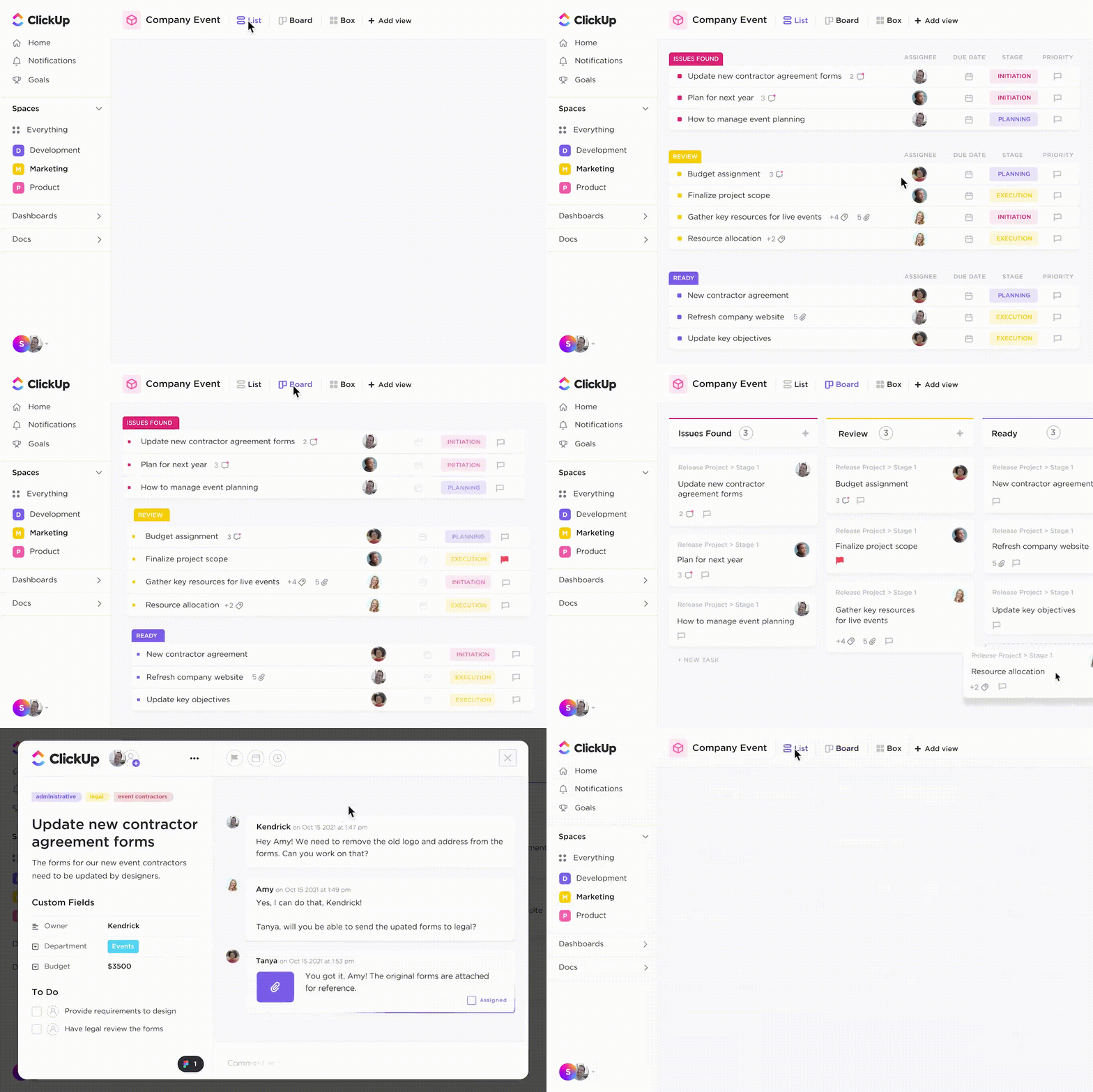
For example, noting during the meeting the tasks involved in the decisions made and who will be responsible for each of them in a cloud-based task manager like ClickUp (our greatest ally), Wrike, or Asana will reduce the time spent on project management.
Automate processes and tasks
Automation is one of the great time-savers of the digital age.
Imagine if with just a couple of clicks, you could:
Create a meeting
Invite the rest of the attendees via email
Create a reminder task for your team
Create a shared document with the points to be discussed
Create a shared folder to exchange resources
etc.
With Nömad, you can make the leap toward automation
In the last 3 years, at Nömad, we have managed to increase team productivity by 37% thanks to automation.
To do this, we identified what was preventing us from making the most of our workday using advanced tools and we drew up a plan to optimize resources and time with fully automated daily processes.
Likewise, many of our clients have already implemented these types of solutions for:
Internal and external meeting management
Medical, dental, aesthetic appointment schedules…
Booking calendars for restaurants, hotels…
Management of large, medium, and small databases
Coming soon
In addition, very soon (follow us closely), we will launch the Nömad platform to manage your brand with hardly any meetings but with a constant exchange of information and 24/7 availability. Shall we notify you when we do?
—————————
Glossary:
*Micromanaging. Observation by the manager of employee tasks.