
The Fediverse: What it is and why it’s the future of social media

Ángeles Losada · 18 ene 2024
The fediverse offers a decentralized alternative to traditional social media, emphasizing user privacy, diversity, and autonomy beyond the control of major tech corporations.
Social media is a fundamental pillar of our communication and personal expression. But now, a new and revolutionary structure known as the fediverse has emerged. Unlike conventional platforms dominated by a few tech giants, it offers a decentralized and open alternative. In other words, it changes the way we interact in the digital space. This emerging network of interconnected platforms represents not only a technological shift, but also a movement toward greater autonomy, privacy, and diversity in the social media realm.
In this post, we’re going to tell you what the fediverse is, how it works, and why it’s gaining ground as the potential future of social media.
What is the fediverse?
The fediverse refers to a decentralized set of interconnected platforms and social networks that operate under common standards, allowing users of different services to communicate with each other seamlessly. This concept emerged as a response to concerns about the centralization and monopolization of the digital space. It was inspired by the email model, where users from different providers can communicate without issues.
The core idea is to foster diversity and interconnection between platforms, unlike traditional social networks which are usually proprietary and closed.
How the fediverse works
The ActivityPub protocol, which is crucial for the functioning of the Fediverse, is a World Wide Web Consortium (W3C) standard for decentralized social networks. It enables content distribution and social interaction between servers, facilitating activities such as following accounts, sharing updates, and sending direct messages, regardless of the platform each user employs.
To give you an idea, it’s as if you could view Instagram posts from your X account and follow the profile without leaving the latter, without sharing your data or activity history.
Key benefits of the fediverse
◼️ Enhanced privacy. By having control over your own data and choosing servers that respect privacy, you reduce exposure to intrusive data collection practices.
◼️ Diverse community. The fediverse hosts a wide range of communities for all niches, each with its own rules and vibe.
◼️ Constant innovation. Because it is decentralized, there is no single point of control or failure, which fosters an environment of innovation and experimentation.
Platforms already operating in the fediverse
Mastodon. An alternative to X that allows for microblogging in a decentralized environment.
Pixelfed. Similar to Instagram, focused on privacy and ad-free.
PeerTube. A decentralized video hosting service, similar to YouTube.
And more coming soon…
Threads in the fediverse
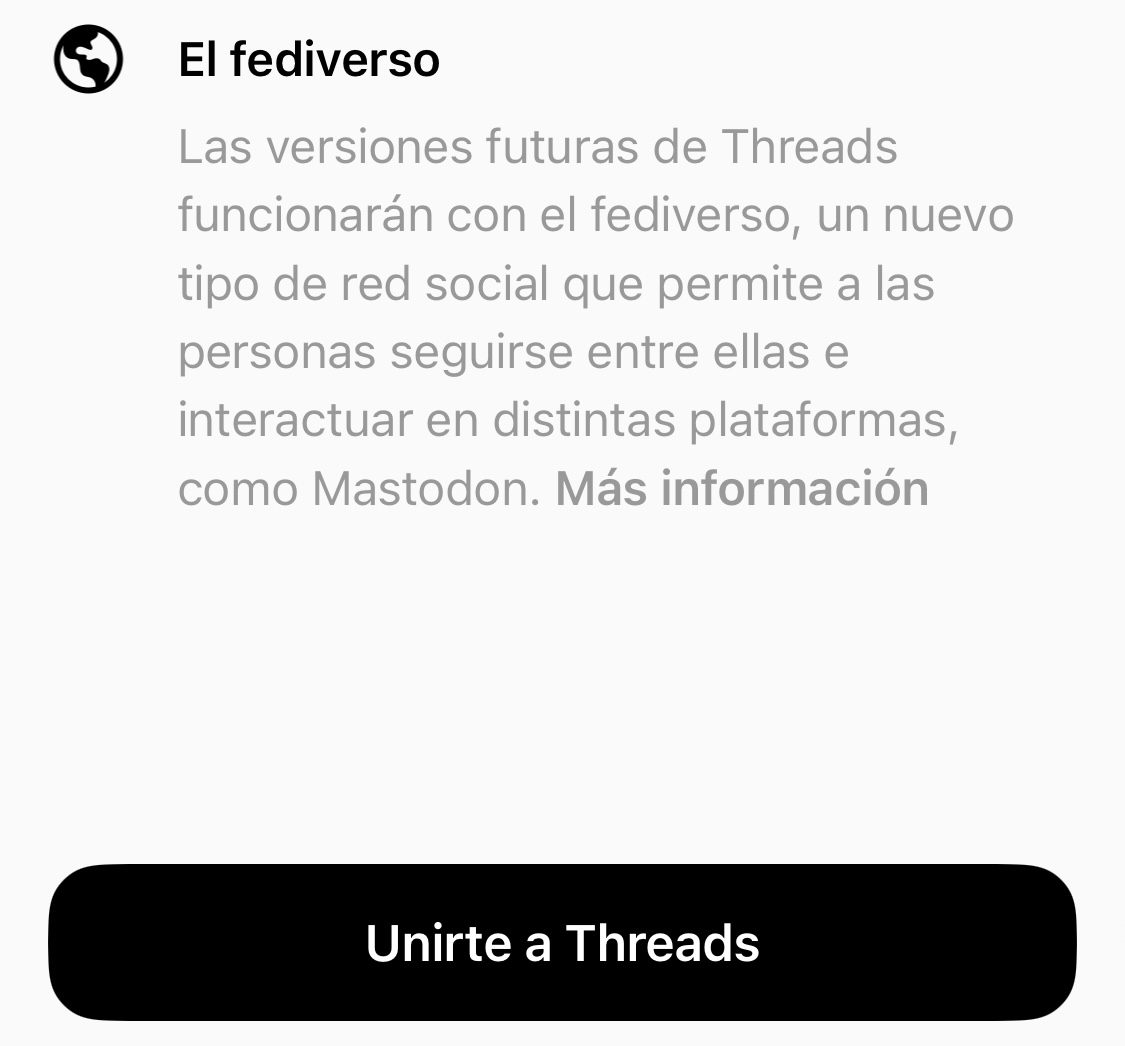
The entry of Threads into the fediverse is presented as an opportunity for users who want to post content on this social network without Meta collecting their data. Additionally, the integration of a platform from a large corporation could bring new users and attention to the fediverse, but it also raises questions about privacy and corporate influence in a space that values decentralization.
The concern that a large entity might try to exert too much control or influence is valid, especially given Meta’s history regarding privacy and data management. However, the decentralized nature of the fediverse could mitigate some of these risks, allowing users to choose servers and communities that align with their values.
Conclusion
The fediverse represents an innovative and promising vision for the future of social media, marking a significant shift from the current model. Its decentralized structure not only promotes greater privacy and data control for users, but also opens the doors to an unprecedented diversity of communities and a redefinition of what it means to be digitally connected.